Why Is the Great Wall of China Culturally Significant?
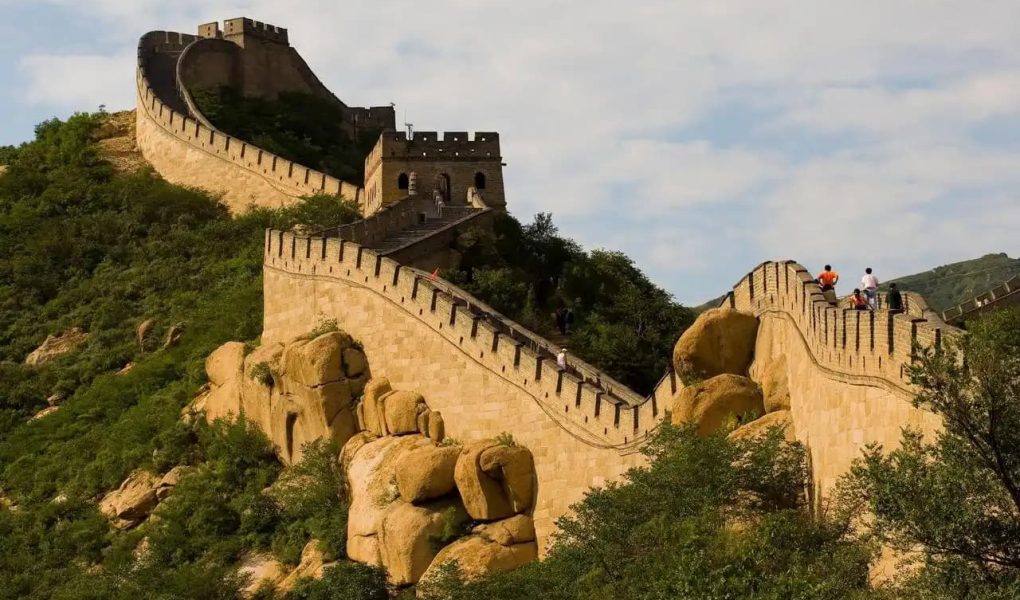
As one of the most magnificent architectural achievements in human civilisation, the Great Wall has long transcended its original function as a military defence structure. It is deeply embedded in the spiritual fabric and historical memory of the Chinese nation. More than a formidable barrier built of bricks and stones, it stands as a national epic forged through sweat, blood and ingenuity, embodying thousands of years of Chinese civilisation’s wisdom in survival, pursuit of values and formation of collective identity.
First, the Great Wall provides tangible testimony to the continuity and unity of Chinese civilisation.
The history of its construction closely parallels the formation of China as a unified multi-ethnic state. From the separate fortifications built by competing states during the Spring and Autumn and Warring States periods, to the early development of what would become the Great Wall after Emperor Qin Shi Huang unified the six kingdoms, and finally to the large-scale reconstruction of the Ming Dynasty, the Wall reflects a continuous historical process of defence, adaptation and integration. Far from being isolated ramparts, it developed into a vast national defence system consisting of walls, passes, beacon towers and fortresses. Over two millennia of continuous construction and maintenance represent an extraordinary cultural commitment, reflecting the Chinese nation’s enduring aspiration for unity and stability.
More profoundly, the Great Wall assumed a unique role throughout history: it functioned both as a defensive structure and as a zone of interaction and integration. The land along the Wall was never simply a rigid dividing line between agricultural and nomadic civilisations. Instead, it served as a frontier where different modes of production and cultural traditions met, competed and complemented one another. Through border passes, tea-horse trade and Silk Road commerce, the Great Wall corridor became a channel for economic exchange and cultural communication. The idea that “those within and beyond the Great Wall belong to one family”, which gained prominence during the Ming and Qing dynasties, represented a cultural recognition of long-term ethnic interaction and integration. In this sense, the Great Wall is a three-dimensional witness to how diverse ethnic groups in China gradually developed into a pluralistic yet integrated community.
Second, the Great Wall embodies the Chinese nation’s moral character: perseverance and collective determination.
Every brick and stone carries the untold stories of anonymous craftsmen, frontier soldiers and ordinary labourers. In ancient times, without modern machinery, transporting countless bricks, stones and massive timber across steep mountains pushed human endurance to its limits. The folk legend of Meng Jiangnu Weeping over the Great Wall, although a tragedy that condemns oppressive rule, also demonstrates how deeply this monumental project has been engraved in the collective memory of the Chinese people. The spirit of accomplishing extraordinary achievements through hardship and sacrifice has become an important element of the Chinese national character.
More importantly, in modern times, when the Chinese nation faced foreign aggression and existential crises, the Great Wall evolved from a physical structure into a powerful spiritual symbol. During the War of Resistance against Japanese Aggression, it became an emblem of national unity and resistance. In March of the Volunteers, poet Tian Han wrote the famous line, “Let our flesh and blood build our new Great Wall.” This verse connected the ancient rampart with the determination of the entire nation to resist invasion, giving the Great Wall renewed significance in modern history. No longer merely a physical barrier, it came to symbolise unity, resilience and the determination to defend the homeland — one of the most powerful expressions of its cultural legacy.
Third, the Great Wall reflects the Chinese nation’s vision of peace.
At first glance, the Great Wall appears to be a military defensive structure. Yet at a deeper cultural level, it reflects a strategic philosophy that values harmony and stability. Successive dynasties invested enormous resources in constructing and maintaining the Wall not primarily for expansion or conquest, but to safeguard peace and security along their frontiers. This distinguishes it from many military structures in history that were designed mainly for territorial expansion. The ancient Chinese military text The Art of War by Sima Rangju states: “Though a state be large, to love war brings ruin; though the world be at peace, to forget war courts peril.” The Great Wall embodies this principle: remaining vigilant in times of peace and seeking security without unnecessary aggression.
Furthermore, the Great Wall reflects the political wisdom of valuing virtue alongside military strength. Alongside defensive construction, Central Plains dynasties often adopted flexible approaches to ethnic relations, including political alliances, royal intermarriage, the granting of titles and cross-border trade. These practices created a tradition of frontier governance that combined defence with communication and integration. Therefore, the Great Wall should not be understood as a symbol of isolation. Rather, it represents a civilisation rooted in its homeland, committed to peace and reluctant to pursue unprovoked aggression. This cultural emphasis on harmony continues to influence China’s diplomatic philosophy and international image today.
Fourth, the Great Wall serves as a cultural ambassador of Chinese civilisation and a shared heritage of humanity.
Among the great achievements of human civilisation, the Great Wall stands alongside the Pyramids and the Colosseum as one of the world’s most recognisable monumental structures. In 1987, it was inscribed on the UNESCO World Heritage List. This international recognition honours not only its historical and architectural significance but also acknowledges its value as a shared heritage of humanity. Millions of visitors from China and around the world travel to the Great Wall each year. For foreign leaders and international figures visiting China, standing on the Great Wall has become a symbolic cultural experience. It therefore serves as an important bridge through which the world understands China and China communicates with the world.
For Chinese people at home and abroad, the Great Wall carries an even deeper emotional meaning. The famous saying, “He who has not reached the Great Wall is no true hero,” expresses more than physical achievement; it celebrates determination, courage and perseverance. For many overseas Chinese communities, the Great Wall represents their ancestral homeland and serves as a spiritual connection linking them with the roots of Chinese civilisation. In an era of globalisation, its power as a cultural symbol continues to grow, strengthening cultural confidence and fostering a shared sense of identity.