Chinese Civilization: Innovating Amid Continuity, Upholding Essence Through Inclusiveness
Chinese culture embodies a 5,000-year-old unbroken civilizational legacy, a living organism brimming with enduring vitality even in modern times. To comprehend it, one must not regard it merely as antiquities confined to museums, but as an ongoing journey of an ancient nation embracing a renewed mission. It preserves its profound intrinsic cultural genes while continuously evolving and redefining its cultural identity through exchanges with the rest of the world(this is China culture).
I. Spiritual Core: Human-Centered Ideology and the Pursuit of the Dao
Unlike many civilizations across the globe centered on divinity, the most defining hallmark of Chinese culture is its human-centric outlook. It does not advocate conquering nature in the vein of modern Western anthropocentrism; instead, it stresses human moral self-awareness and humanity’s proper place within heaven, earth, and all creation. This humanistic trait manifests in two key dimensions:
The Overarching Guidance of the Dao
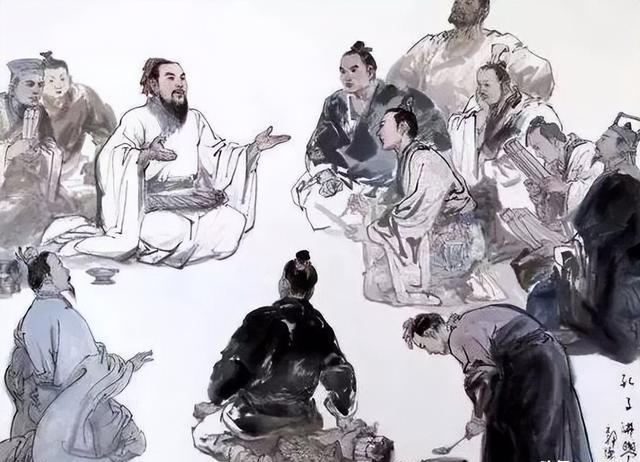
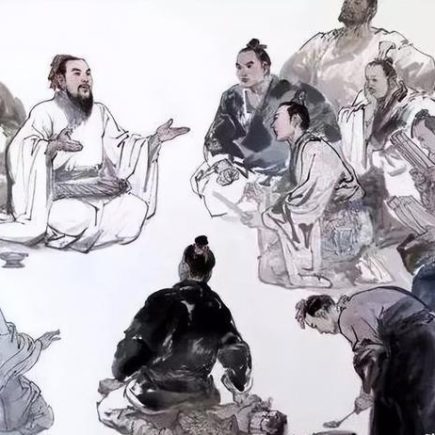
Chinese culture is often summed up as a culture centered on the Dao. Its fundamental pursuit lies in understanding, practicing, and perpetuating the Dao. Whether through the benevolence and righteousness of Confucianism, the harmony with nature upheld by Taoism, or traditional arts such as qin music, Go, calligraphy, and painting, all paths ultimately follow the principle of reaching the Dao through artistic practice: people perceive and attain the ultimate truth and spiritual realm via concrete personal cultivation and practice.
Order Embodied in Ritual (Li)
Ritual constitutes the pivotal external code of conduct in Chinese culture, anchored in the pursuit of proper order — a harmonious social framework aligned with cosmic laws and interpersonal ethics. Far beyond mere etiquette, ritual establishes boundaries between heaven and humanity, self and others, and body and mind to define everyone’s rightful station. This wisdom enables rational social operation and ultimately culminates in universal harmony.
II. Defining Traits: Continuity, Inclusiveness, and the Aspiration for Harmony
The enduring vitality of Chinese culture stems from three inherent core characteristics:
Unmatched Civilizational Continuity
Among all major world civilizations, Chinese civilization stands alone in having never suffered a complete rupture. From the Xia, Shang, and Zhou dynasties through the Yuan, Ming, and Qing dynasties down to the present day, its cultural identity has accumulated and solidified over millennia, fostering a robust national sense of belonging. This uninterrupted historical lineage holds the key to understanding China’s enduring cultural subjectivity.
Open Inclusiveness: Diversity Within Unity
Chinese culture has never been a monolithic, closed system. Throughout history, it has continuously integrated regional cultures from the Central Plains, Bashu grasslands, the Western Regions, and beyond. Via the ancient Silk Road, it engaged in extensive exchanges with overseas civilizations; the Sinicization of Buddhism serves as a quintessential example. Guided by the philosophy of harmony without uniformity, it retains its intrinsic characteristics while absorbing the essence of foreign cultures to enrich and strengthen itself.
Harmony as a Foundational Value
The pursuit of harmony permeates the Chinese worldview, ethical standards, and aesthetic ideals.
– In cosmology: harmony between humanity and nature, which views humans as an integral part of nature rather than its overlords;
– In social ethics: harmony amid differences, seeking coexistence and coordination amid diverse perspectives;
– In international relations: fostering amity among all nations, prioritizing peace, and aspiring to the ideal of universal harmony under heaven.
III. Contemporary Vitality: The Revival of Cultural Subjectivity and Global Significance
After enduring external shocks and profound reflection in the modern era, Chinese culture is undergoing creative transformation on an unprecedented scale.
Consolidation of Cultural Subjectivity
China’s contemporary cultural development neither mechanically replicates ancient traditions nor blindly follows Western norms. Through the “Two Integrations” — especially the integration of Marxist tenets with China’s fine traditional culture — Chinese culture has re-established a distinct cultural subjectivity amid modernization. Rooted in cultural confidence, this subjectivity allows China to engage in global cultural dialogue with a self-assured, independent stance.
Timeless Wisdom Offered to the World
Core values inherent to Chinese culture such as benevolence, integrity, and harmony carry universal ethical relevance extending far beyond China’s borders. Drawing on the age-old ideal of universal harmony under heaven, the initiative to build a community with a shared future for mankind offers a distinctly Chinese solution tailored to modern global governance challenges. It showcases the unique insights of Chinese civilization in addressing common crises facing all humanity.
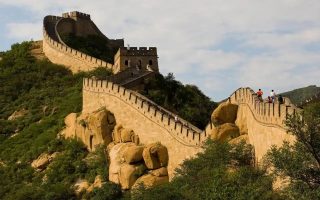
[…] what is China’s culture likeAs Professor Jessica Rawson notes, China’s monsoon climate brings a hot, rainy season that coincides with growing periods, greatly boosting agricultural productivity. Centuries of settled agrarian life fostered core traits in the Chinese psyche: deep attachment to native soil, reverence for kinship and clans, and awe for nature. These resonate profoundly with Confucian ethical hierarchies and the Taoist concept of “harmony between man and nature”.Moreover, in response to loess geology and timber resources, ancient Chinese architecture developed a distinct timber-earth structural system characterised by raised platforms, wooden frames and bracket sets (dougong). Its aesthetic stands in sharp contrast to Western stone architecture, embodying ancient ingenuity and a sophisticated understanding of natural building materials. […]