How did China develop a rich unique culture
Diversity-in-Unity with a Time-Honoured Heritage: The Developmental Path of Distinctive Chinese Culture
The richness and uniqueness of Chinese culture stand as a marvel in the history of human civilisation. Age-old and enduring, it has persisted for thousands of years without interruption. Broad-ranging in essence, it manifests striking diversity alongside unity. To grasp how this culture took shape, we may examine it from three dimensions: its geographical foundations, historical evolution, and inner ethos.
One Land: A Geographical Cradle of Isolation yet Expanse
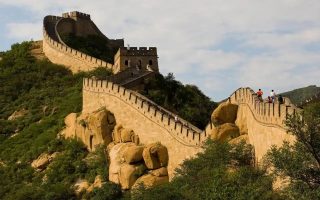
The distinctiveness of Chinese culture first stems from its relatively self-contained yet internally connected geography. Backed by lofty mountains and vast gobi deserts on one side and bordered by seas on the other, the East Asian landmass forms a self-contained geographical domain. This allowed Chinese civilisation to evolve largely free from large-scale external disruptions. Meanwhile, the Yellow River, the Yangtze and their tributaries served as arteries for internal interconnection. Far from being monolithic, this vast territory encompasses plains, plateaus, grasslands and forests, furnishing fertile ground for regional cultures to flourish. This geographical trait — self-contained yet not sealed off, expansive yet interconnected — laid the natural foundation for Chinese culture’s pattern of diversity-in-unity. It was within the two core agricultural zones of the middle-lower Yellow River and Yangtze River basins that ancient Huaxia communities advanced into civilisation at an early date, sustained by millet and rice farming, building the material bedrock for later cultural prosperity.
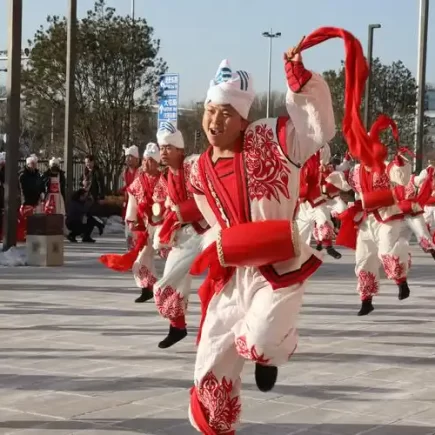
Diversity-in-Unity: Growth through Encounter and Integration
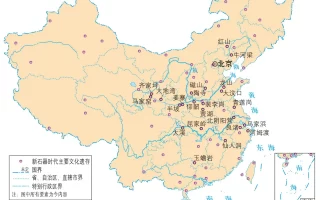
Chinese culture does not stem from a single origin. Over millennia, it evolved into a pattern of diversity-in-unity forged through constant exchange, interaction and fusion among multiple regional cultures. Archaeological evidence reveals that as early as the Neolithic Age, distinct cultural spheres had sprung up across the Yellow River basin, Yangtze River basin, West Liao River basin and beyond. Examples include the Yangshao Culture of the Central Plains, the Liangzhu Culture of the lower Yangtze, and the Hongshan Culture of the Liao River basin. Like “stars scattered across the sky”, they jointly constituted the sources of early Chinese civilisation.
This pluralism gradually converged into unity, driven by sustained cross-regional interactions. In pre-historic times, fine painted pottery, jade artefacts and other cultural treasures from disparate regions travelled far across terrain, fuelling wide-ranging exchanges and giving rise to what is termed the “proto-China” in cultural terms. Later, successive dynasties of the Xia, Shang and Zhou, as well as the unification under the Qin–Han empires, greatly accelerated this process. Robust centralised governance, together with advanced courier and water-transport networks, bound the sprawling territory together and fostered thorough integration of economies and cultures. Over the course of this evolution, the culture centred on the middle-lower Yellow River exerted immense magnetism and radiating influence, acting as the cohesive core for diverse communities. Chinese culture also demonstrated remarkable inclusiveness. Introduced from India, Buddhism underwent a long process of Sinicisation, eventually merging with Confucianism and Taoism to become an integral component of Chinese civilisation. This wisdom of “harmony without uniformity” enabled Chinese culture to retain its core continuity while absorbing new influences, renewing itself across ages.
Inner Ethos: The Soul Behind Cultural Uniqueness
Across its long trajectory, Chinese culture cultivated enduring core spirits that constitute the soul of its distinct identity.
First comes the holistic outlook and reverence for harmony rooted in agrarian civilisation. Centuries-long farming fostered deep reliance on and awe of nature, giving rise to the philosophical notion of the unity of man and nature. This worldview sees humanity and nature as an integrated whole rather than opposing forces, profoundly shaping Chinese modes of thinking, aesthetic tastes and outlooks on life. This holistic, harmonious ideal permeates fields ranging from traditional Chinese medicine that emphasises working with natural rhythms, to landscape painting that prioritises artistic conception and spiritual resonance.
Second is the ethical order shaped by kin-based clan society. Stable agrarian livelihood nurtured kinship-centred clan institutions, from which emerged the social structure of “family-state isomorphism”. Ancestor veneration and the emphasis on family continuity cultivated profound ethical sentiments, alongside political ideals pursuing stable social order. This cultural predisposition toward order, stability and moderation has endowed Chinese society with extraordinary continuity and cohesion throughout thousands of years of history.
a history of food culture in China
Chinese culinary culture boasts an exceptionally long history and profound depth, rarely paralleled across the globe. It is far more than a simple matter of what to eat and how to eat. Instead, it stands as a grand epic weaving together technological progress, philosophical thought, social transformation and ethnic exchanges. From the precept of “ritual originates first from food and drink” in the pre-Qin era to the integrated innovations of the present day, cuisine serves as a mirror reflecting the evolutionary path of Chinese civilization.