China’s geographical environment, much like a grand stage, has profoundly influenced and shaped the civilisation nurtured on this land. From towering mountain ranges to surging rivers, from vast plains to diverse climates, these natural endowments have not only furnished the Chinese nation with the material foundations for survival and development but have also left indelible marks on its cultural DNA, social structures and historical trajectory. As the only ancient civilisation in the world that has never been interrupted and endures to this day, Chinese civilisation owes this remarkable feat in large part to its distinctive geography — an unsung hero behind its continuity.
Agricultural Patterns and the Foundations of Civilisation
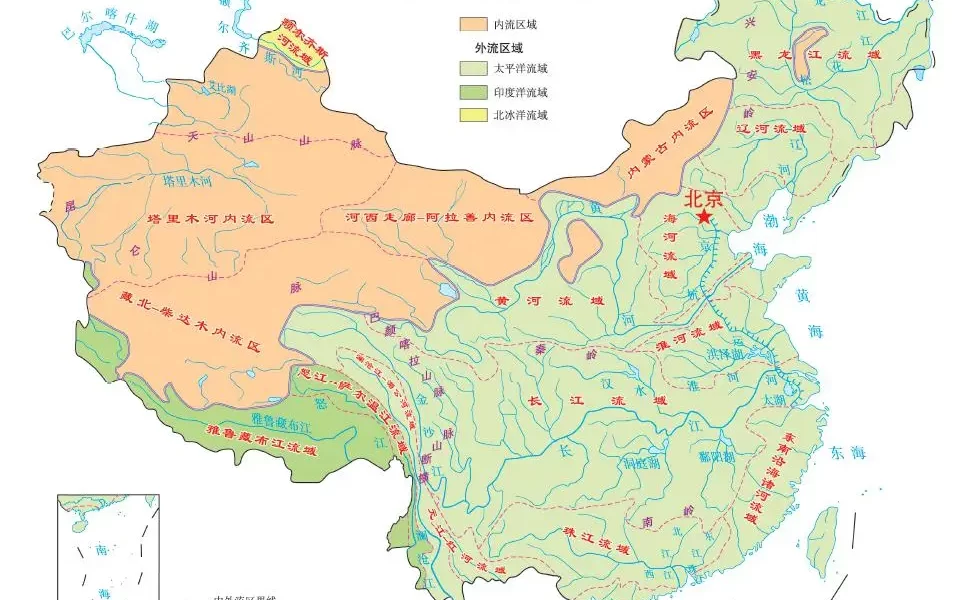
One defining feature of China’s geography is its vast territory, home to two world-class rivers: the Yellow River and the Yangtze River. This dual-river civilisation framework is rare across the globe. The loess tablelands of the Yellow River Basin and the West Liao River Basin feature loose, easily tilled soils, offering ideal conditions for the origins of dry-farming agriculture (foxtail and broomcorn millet). By contrast, abundant rainfall and extensive river-lake systems in the Yangtze River Basin gave rise to highly developed rice-farming. This diverse and complementary agricultural system laid the economic groundwork for the pluralistic-integrated pattern of Chinese civilisation.
More crucially, the alternating rise and decline of these two major river basins functioned as a “double insurance”. When the Yellow River Basin declined due to climate change, ecological degradation or warfare, the Yangtze River Basin, drawing on its immense potential, would take over as the nation’s economic and cultural heartland, safeguarding the continuity of civilization’s development.
Great Unification and Internal Cohesion
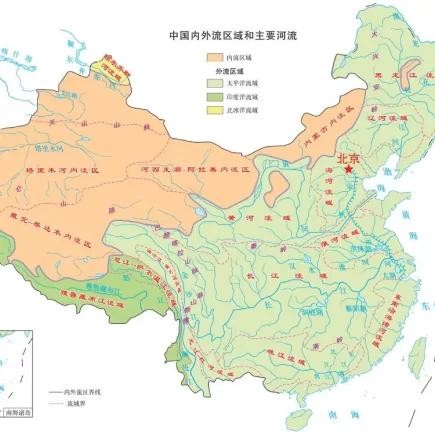
Despite China’s varied and complex terrain, its core zones — the middle-lower reaches of the Yellow River and the middle-lower Yangtze plains — form a contiguous expanse without insurmountable natural barriers within. This geographical trait of relative isolation from the outside world yet internal accessibility greatly facilitated cross-regional cultural exchange and integration. The stability and openness of loess landscapes enabled large-scale social organisation and administration. The early tribal confederations, the dynasties of the Xia, Shang and Zhou, and ultimately the unified empires of the Qin and Han, all rested on this geographical bedrock.
As Professor Ge Jianxiong observes, the Yellow River Basin once hosted “the largest tract of arable land in the Northern Hemisphere”. Its broad flat terrain allowed rulers to organise production, commodity circulation and population mobility, creating spatial conditions for the political unification of the Huaxia people. Meanwhile, its relatively enclosed setting — high mountains and Gobi deserts to the northwest, and the ocean to the east — shielded early Chinese civilisation from incursions by powerful foreign civilisations. It thus evolved independently and steadily, fostering its unique world-view of being “the centre under heaven” and strong cultural self-confidence.
Agrarian Civilisation and National Mentality
As Professor Jessica Rawson notes, China’s monsoon climate brings a hot, rainy season that coincides with growing periods, greatly boosting agricultural productivity. Centuries of settled agrarian life fostered core traits in the Chinese psyche: deep attachment to native soil, reverence for kinship and clans, and awe for nature. These resonate profoundly with Confucian ethical hierarchies and the Taoist concept of “harmony between man and nature”.
Moreover, in response to loess geology and timber resources, ancient Chinese architecture developed a distinct timber-earth structural system characterised by raised platforms, wooden frames and bracket sets (dougong). Its aesthetic stands in sharp contrast to Western stone architecture, embodying ancient ingenuity and a sophisticated understanding of natural building materials.
Resilience: Adversity and Adaptation
Geography was by no means static. Climate shifts and natural disasters were also powerful drivers of cultural evolution. Historically, several waves of southward migrations by northern nomadic peoples were linked to cooling climates that degraded grasslands and intensified survival pressures. China’s extensive landmass and diverse ecological niches gave ancient peoples ample room for manoeuvre. Faced with environmental crises, they could migrate or adjust their livelihood strategies. This adaptability forged Chinese culture’s remarkable vitality and inclusiveness.
For instance, around 4000 BP (before present), cooler and drier climates triggered the collapse of the Liangzhu culture in the middle-lower Yangtze. The Central Plains, blessed with favourable environmental conditions, sustained development and eventually emerged as the core of Chinese civilisation.
Conclusion
In conclusion, China’s geography is far more than a static backdrop; it acts as an ongoing “civilisation-shaper”. It determined the predominantly agrarian livelihood of the Chinese people, made national unification and political integration feasible, and profoundly shaped its philosophical traditions, architectural arts and national character. This geographically complex, self-contained continental unit underpins the enduring, profound and unbroken legacy of Chinese civilisation.
In conclusion, China’s geography is far more than a static backdrop; it acts as an ongoing “civilisation-shaper”. It determined the predominantly agrarian livelihood of the Chinese people, made national unification and political integration feasible, and profoundly shaped its philosophical traditions, architectural arts and national character. This geographically complex, self-contained continental unit underpins the enduring, profound and unbroken legacy of Chinese civilisation.