How Many Cultures Are There in China? — A Grand Question Defying a Numerical Answer
Any attempt to quantify “how many cultures exist in China” quickly lands us in a predicament. Chinese culture cannot be reduced to a static set of specimens countable by number. Instead, it is a living, dynamic organism woven together by the depth of history, breadth of geography, ethnic diversity and intricate belief systems. It forms a multidimensional “cultural universe” whose richness far exceeds what any single figure could capture.
The Temporal Depth of Civilization: An Unbroken Narrative Spanning Five Millennia
To grasp the scope of Chinese culture, we must first situate it along an extensive historical timeline. Among the Four Great Ancient Civilizations, China alone boasts an unbroken written tradition. From the oracle bone script of the Shang Dynasty, bronze inscriptions of the Zhou, bamboo and silk manuscripts of the Qin and Han, all the way to the Chinese characters we use today, this written lineage stretches more than 3,500 years without interruption.
Thanks to this continuity, ancient classics such as The Book of Songs and The Book of Documents, alongside literary treasures including Chu odes, Han fu poetry, Tang poems and Song ci lyrics, remain legible and accessible to modern readers. This profound historical heritage constitutes the fundamental temporal dimension of Chinese culture. Along this timeline, culture itself constantly evolves, merges and innovates, unfolding as a living chronicle of civilization.
Diverse Geographic Zones: A Symphony of Four Major Cultural Ecologies
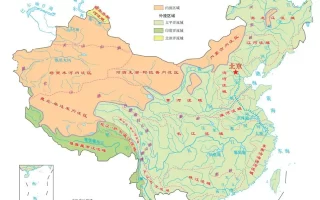
China’s vast territory encompasses extraordinarily varied natural landscapes, each nurturing distinct cultural ecosystems adapted to local conditions. Scholars have classified Chinese culture into four primary spheres, offering a clear framework to understand its geographic diversity:
1. Steppe and Highland Culture
Predominantly found in Inner Mongolia, Xizang, Gansu, Qinghai, Xinjiang and surrounding regions, it epitomizes nomadic traditions. Marked by unrestrained vitality and bold openness, it has spawned distinctive music, dance, costumes and culinary customs, notably the prevalence of beef, mutton and dairy products.
2. Yellow River Culture
One of the cradles of Huaxia civilization, this zone is defined by dryland farming. It gave rise to stately subcultures in Guanzhong, the Central Plains and Qilu, profoundly shaping the fundamental temperament of the Chinese nation.
3. Yangtze River Culture
A culture forged alongside waterways. The extensive river networks of the Yangtze basin fostered lyrical art, timeless legends such as The Peacock Flying Southeast, and monumental hydraulic works including Dujiangyan. Distinct regional variants emerged along its course: Bashu, Chu-Xiang and Wuyue cultures.
4. Maritime Culture
It embodies the pioneering, adventurous spirit within Chinese civilization. It played a pivotal role in the rise of modern national industry and the reform and opening-up drive, closely intertwined with coastal cultures of Lingnan, the Taiwan Strait rim and the Bohai Rim.
These four spheres are not isolated from one another. Like four great rivers and their countless tributaries, they converged and interacted throughout history, jointly composing the grand symphony of Chinese civilization.

A Blooming Array of Ethnic Traditions: Shared Homeland of the Fifty-Six Ethnic Groups
When discussing Chinese culture, the cultural treasures of China’s 56 ethnic groups form an indispensable core component. Chinese civilization “takes shape as countless streams converge from the outstanding cultures of all ethnic peoples.”
Beyond the Han classics of history, philosophy and literature, we possess monumental epics including the Mongolian Jangar, the Xizang Gesar, and the Kyrgyz Manas. Across ethnic lines, traditions of religion, language and customs continuously borrow from and blend with one another. For instance, Dunhuang murals combine Central Asian linework with traditional Chinese aesthetic conception. The imperial city of Chang’an during the Tang Dynasty welcomed merchants and monks from Persia, Japan, India and beyond. Throughout history, the Han, Xizang, Mongolian and other ethnic groups exchanged ideas in religious culture, mutually enriching Chinese civilization.
The Core of Culture: Confluence of Philosophical Thought and Faith
At a deeper spiritual level, Chinese culture demonstrates remarkable capacity for integration and inclusiveness. Historically, its religious landscape has centered on Confucianism, Buddhism and Taoism, with beliefs of numerous ethnic communities coexisting harmoniously. Confucian ethics, Taoist reverence for nature, and Buddhist compassion together molded the spiritual outlook of the Chinese people.
Quanzhou offers a vivid illustration of this inclusiveness. As a UNESCO World Heritage Site known as “Emporium of the World in the Song-Yuan Period”, the city hosts shrines of Confucianism, Buddhism and Taoism alongside mosques, Christian churches and Hindu monuments. One striking feature is Hindu stone carvings repurposed in Buddhist temples.