Tang Grace and Han Elegance Rooted in Japan: The Profound Influence of Chinese Civilization on Japan
Throughout history, scarcely any other nation has consciously, persistently and extensively absorbed the civilizational achievements of another country the way Japan did, ultimately integrating these influences organically into its own indigenous culture. The impact of Chinese civilization upon Japan constitutes a millennia-spanning grand theme touching the very roots of both civilizations.
I. The Genesis of Cultural Exchange: Why China?
Japan’s profound indebtedness to Chinese culture first stems from its unique geographical location and historical opportunities.
An island nation situated in East Asia, Japan witnessed relatively slow development of its native civilization for a prolonged stretch of history. Across the sea stood China, which had fostered a highly sophisticated feudal civilization by the Sui and Tang dynasties. Japan embraced China out of deliberate admiration for a stronger civilization, driven by its own national development demands. As American scholar Marius Jansen put it, to Japan, China was equivalent to classical antiquity, Renaissance Italy, and 18th-century France all rolled into one — an enduring, unparalleled cultural giant.
Against this backdrop, Japan displayed remarkable enthusiasm for learning and exceptional organizational capacity. From the 7th to the 9th centuries AD, Japan dispatched large-scale official missions known as Kentōshi (Envoys to the Tang Dynasty) on frequent occasions. These delegations comprised overseas students, Buddhist monks pursuing scholarly studies, craftsmen and other specialists. Braving perilous ocean voyages, they embarked westward with a single goal: to bring back the entirety of China’s most advanced culture and institutional systems to Japan. By contrast, successive Chinese dynasties exported their culture to Japan rather passively and with little regard for the island realm, which in turn granted Japan greater autonomy and selectivity in assimilating foreign cultural elements.
Chinese civilization exerted an all-round, systematic influence on Japan, permeating every sphere from state superstructure down to daily civilian life.
1. Writing System and Literature: Laying the Foundation of Written Language
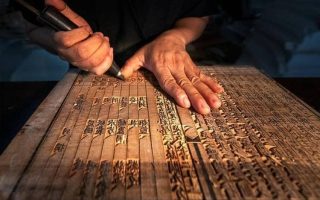
Prior to creating its own script, Japan directly adopted Chinese characters. Han characters were used not only to compile historical works such as the Kojiki (Records of Ancient Matters), but also to draft official documents and compose literary texts. The renowned Man’yōshū (Collection of Ten Thousand Leaves) employed Chinese characters as phonetic notations, a unique literary product shaped entirely by Chinese writing. Japan’s two kana syllabaries — hiragana and katakana — were devised by simplifying the cursive and regular forms of Chinese characters respectively.
The eastward spread of Chinese classics laid the groundwork for cultural transplantation. Research confirms that Confucian texts including the Analects had been introduced to Japan between the 3rd and 5th centuries. Later, the Records of the Grand Historian, Wen Xuan (Anthology of Refined Literature), and poetry collections of Sui and Tang literati poured into Japan in large volumes, profoundly shaping Japanese literary creation. Murasaki Shikibu, female author of the Heian-era masterpiece The Tale of Genji, drew heavy inspiration from Bai Juyi’s Song of Everlasting Sorrow. During the Edo period, Japanese translations and adapted rewrites of Chinese vernacular novels like Water Margin and Romance of the Three Kingdoms proliferated, even spawning a distinct Japanese literary genre called yomihon (reading books).
2. Ideology and State Institutions: Forging Japan’s National Framework
Confucianism and the Tang legal code system left the most enduring ideological and institutional legacies in Japan.
Confucian Thought and Governance
Promulgated in 604 AD by Prince Shōtoku, the Seventeen-Article Constitution, counted among Japan’s earliest written laws, drew extensively on Confucian classics such as the Analects and Book of Rites. It upheld core tenets including “harmony is to be valued above all things” and the hierarchical order that “the sovereign stands as heaven, and subjects as earth”. The Taika Reform of 645 further modelled Japan’s governance directly on Tang legal institutions, establishing Japan’s first centralized feudal state. Under the Edo Shogunate, Neo-Confucianism (Zhu Xi School) was elevated to official state learning, serving as the theoretical bedrock sustaining shogunal rule and bushidō (the Way of the Warrior). Samurai warriors were required to master literary pursuits alongside martial arts, fostering the exclusive dual tradition of bunbu ryōdō (the dual paths of letters and arms).
Buddhism and Religion
Though Buddhism originated in India, nearly all Japanese Buddhist sects and canonical scriptures were transmitted via China. Two major Japanese schools — Tendai and Shingon — were founded by Saichō and Kūkai respectively, both prominent scholars among the Eight Great Monks Who Studied in Tang China. In addition, Chinese Daoism and folk beliefs exerted far-reaching influence on Japan’s indigenous Shinto faith and popular customs.
3. Crafts and Daily Life: Permeating Japanese Aesthetic Sensibility
Beyond grand ideologies and state systems, Chinese culture seeped into the finer details of ordinary Japanese life.
- Urban Planning: Heijō-kyō (modern Nara) built in the Nara Period and the later Heian-kyō (modern Kyoto) fully replicated the ward-and-market layout of Tang-dynasty Chang’an City.
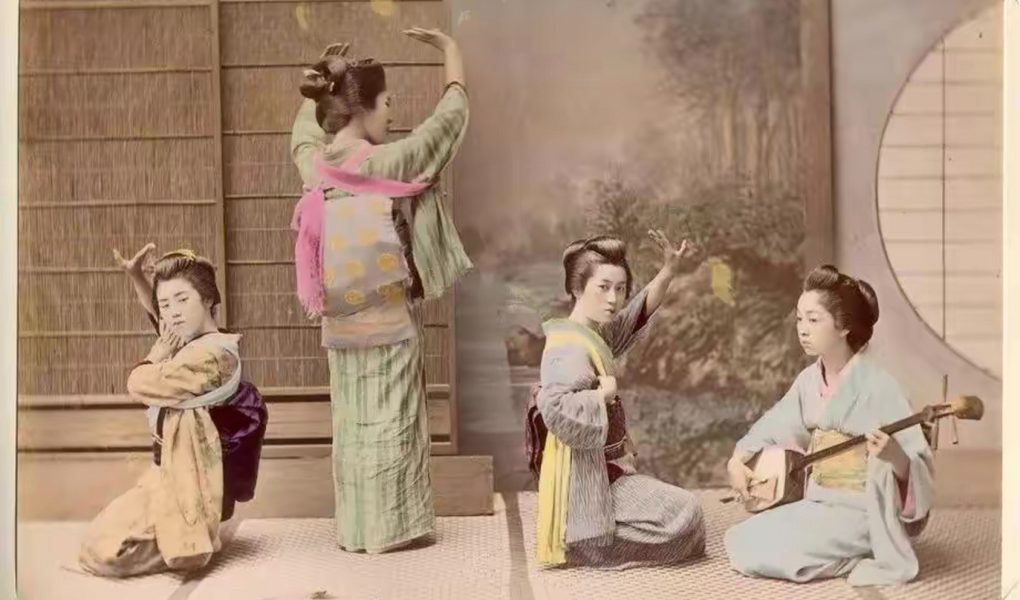
- Cuisine and Performing Arts: Culinary imports including matcha tea (derived from the Song dynasty whisked tea ceremony), tofu and noodles were brought to Japan by Buddhist monks. Chinese sangaku folk entertainment evolved into Japan’s Noh theatre; numerous Tang musical scores and dance repertoires have been preserved as national treasures of Japan to this day. The traditional Okinawan shamisen lute traces its origins to the Chinese sanxian three-stringed instrument.
- Craftsman Spirit: Japan’s celebrated craftsmanship culture is deeply rooted in Chinese civilization. From the dawn of handicraft techniques and reverence for sacred craftsmanship embodied in artefacts, to the impact of Ming and Neo-Confucianism on early modern Japanese artisan ethics, Chinese thought provided indispensable ideological nourishment.
III. Assimilation and Transformation: The Japanization of Chinese Culture
Japan never adopted Chinese civilization wholesale; instead, it underwent selective adaptation and indigenization, encapsulated by the maxim
Japanese spirit, Chinese learning.
For instance, traditional Chinese Confucianism advocated universal ethical bonds centred on sovereign-minister and father-son relationships. When introduced to Japan, the virtue of loyalty was elevated above benevolence, evolving into absolute, unconditional devotion to one’s feudal lord — perfectly aligned with Japan’s samurai social structure. Likewise, Zhu Xi Neo-Confucianism in China focused chiefly on metaphysical inquiries into principle, vital energy, human nature and mind; Edo-period Japanese Confucian scholars, however, prioritized its practical application in governance and moral conduct, rejecting empty metaphysical speculation. Furthermore, Chinese operas such as The Peach Blossom Fan were thoroughly reworked via Japanese adaptation (hon’an): their settings, plots and characters were fully localized, transformed into authentic Japanese artistic works.